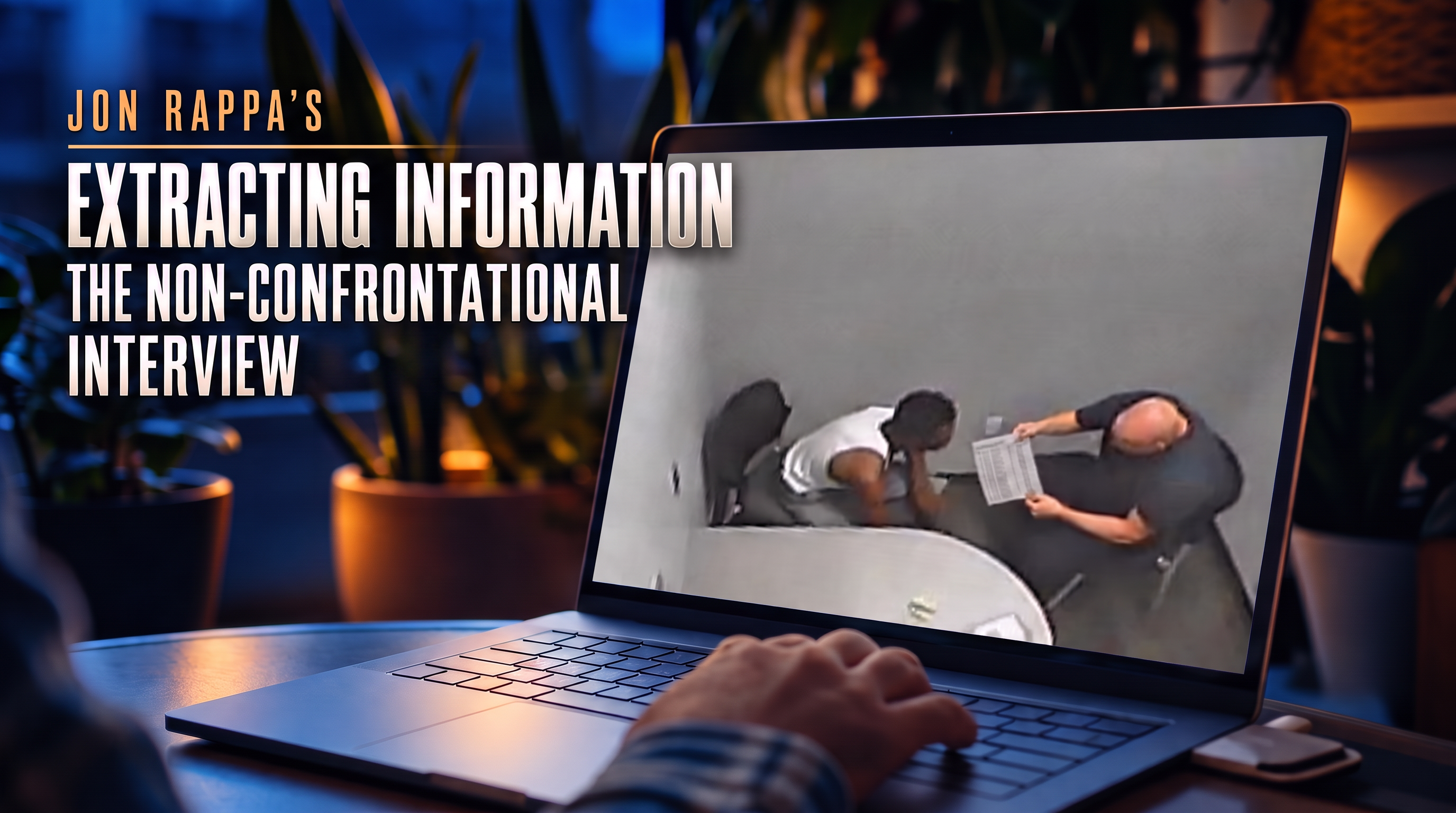
Designed for patrol officers, detectives, and private-sector investigators, this online course teaches a practical approach to gathering information from victims, witnesses, and suspects. The foundation is simple: information first, evidence next.
Learn to build rapport, obtain detailed narratives and timelines, frame questions around known facts, and tactically introduce evidence while keeping the conversation non-confrontational. Through practical examples and a case study, you’ll develop questioning and evidence strategies that test accounts, uncover new leads, and recognize innocent explanations. The course also addresses false confessions and coercion, keeping the focus on reliable information and finding the truth.
Your instructor, Jon Rappa, is an adjunct with Advanced Police Concepts.
Once enrolled, you have access to this course for 30 days.
Topics Include:
- Introduction to the Interview
- Preparing for the Interview: Setting the Stage for Success
- Building Rapport
- Instant Rapport
- Building the Suspect Timeline
- Developing an Evidence and Questioning Strategy
- The Narrative-Based Interview & the Funnel Method
- Victim, Witness, and Suspect Interviewing
- Tactically Introducing Evidence
- Avoiding False Confessions and Coercion

About the instructor
Jon Rappa is a law enforcement instructor and author of *Extracting the Truth: A Detective’s Playbook*. His interviewing experience began in loss prevention in 1991, followed by service with the Florida Department of Corrections and a policing career that began in 2001. His assignments have included patrol, narcotics, the DEA Task Force, a 13-month deep undercover assignment, street and violent crimes, juvenile investigations, and robbery/homicide. Throughout his career, he has interviewed thousands of victims, witnesses, and suspects. Jon teaches interview and interrogation to law enforcement professionals across the country, drawing on firsthand investigative experience and research-backed interviewing principles. His instruction combines lessons from actual cases with practical strategies for building rapport, gathering detailed accounts, and tactically introducing evidence. He has also presented to the Southeastern Homicide Investigators Association and the Southeastern Field Training Association.